
Lyra Viol
Unknown Artist
17th century
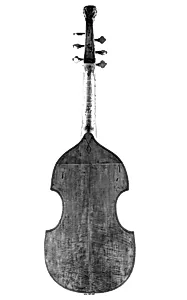
Medium
Wood
Dimensions
Body length: 53.9 cm (21.22 in.); Greatest body width: 32.3cm. (12.72in.)
Classification
Chordophone-Lute-bowed-fretted
Culture
Italian
Department
Musical Instruments
Museum
Metropolitan Museum of Art, New York, NY
Credit
The Crosby Brown Collection of Musical Instruments, 1889
Accession Number
89.4.2227
Rights
Public Domain
Art Historical Context
Step into the opulent soundscape of 17th Italy with the *Lyra Viol*, a wooden chordophone from the lute family. Crafted by an unknown master artisan, this bowed, fretted instrument boasts a gracefully contoured body measuring 53.9 cm in length 32.3 cm at its widest, designed for intimate virtuoso performances. Its classification as a lute-bowed-fretted highlights the era's innovative lutherie, where was meticulously shaped to produce resonant, polyphonic tones through complex chordal bowing techniques. The lyra viol emerged during the Baroque period, a golden age for string instruments in Italy, where musicians like those in Venetian academies pushed boundaries with intricate solos and continuo accompaniment. Frets allowed precise intonation for elaborate tunings—often in fourths, akin to a lyre—making it a favorite for improvisational music in courts and salons. This piece reflects the cultural fusion of Italian craftsmanship and Northern European influences, embodying the viol's role in transitioning from Renaissance consorts to operatic ensembles. Housed in The Metropolitan Museum of Art's Crosby Brown Collection of Musical Instruments (acquired 1889), the *Lyra Viol* offers a tangible link to forgotten melodies. Though silent today, its elegant form invites us to imagine the passionate strumming of long-ago virtuosos.