
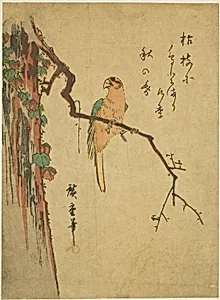
Macaw on ivy-covered tree
1830s
Medium
Color woodblock print; chuban
Dimensions
22.8 × 16.7 cm (9 × 6 1/2 in.)
Classification
woodblock print
Department
Arts of Asia
Museum
Art Institute of Chicago
Accession Number
56229
Rights
Public Domain
Art Historical Context
**Macaw on Ivy-Covered Tree** Utagawa Hirosh (1797–1858), one of Japan's most celebrated ukiyo-e masters, created this vibrant color woodblock print in the1830s. Measuring 22.8 × 16.7 cm in the chuban format, it captures a striking macaw perched amid lush, ivy-draped branches. Hiroshige, renowned for his poetic landscapes like *The Fifty-three Stations of Tōkaidō*, also excelled in *kachō-e*—depictions of birds and flowers—blending meticulous observation with evocative beauty. This artwork exemplifies the ukiyo-e tradition of the Edo period (1603–1868), when woodblock prints democratized art for everyday viewers. Produced through a labor-intensive process—carvers, printers, and publishers collaborating on multiple blocks for rich colors like deep greens and the macaw's vivid plumage—it reflects Japan's fascination with nature's fleeting elegance. Exotic birds like the macaw symbolized rarity and wonder, imported via trade routes. Housed in the Art Institute of Chicago's Arts of Asia department, this chuban print highlights Hiroshige's mastery of composition and color harmony, influencing global artists from Van Gogh to Whistler. A delightful window into 19th-century Japanese aesthetics, it invites visitors to savor the interplay of wild life and verdant decay. (198 words)
About the Artist
Utagawa Hiroshige · 1826–1869
Utagawa Hiroshige (1797–1858), born Andō Tokutarō, was the last great master of Japanese ukiyo-e woodblock printmaking and one of the most influential landscape artists in history. Born in Edo (modern Tokyo) into a low-ranking samurai family serving as fire wardens, Hiroshige transformed landscape printmaking into a poetic meditation on nature, weather, and everyday life. His revolutionary approac...