
Mace
Unknown Artist
probably 18th century
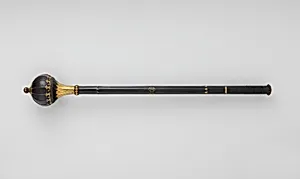
Medium
Steel, gold, silk
Dimensions
L. 25 in. (63.5 cm); Diam. of head 3 1/4 in. (8.1 cm); Wt. 2 lb. 11 oz. (1232 g)
Classification
Shafted Weapons
Culture
North Indian or possibly Deccan
Department
Arms and Armor
Museum
Metropolitan Museum of Art, New York, NY
Credit
Bequest of George C. Stone, 1935
Accession Number
36.25.1874
Rights
Public Domain
Art Historical Context
This elegant mace, likely crafted in the 18th in North India or possibly the Deccan region, the fusion of lethal functionality and opulent artistry in South Asian arms. Standing 25 inches long with a bulbous head just over 3 inches in diameter it weighs a substantial 2 pounds 11, making it a formidable shafted weapon balanced for powerful swings in combat. Forged from steel for durability, it is adorned with gold—probably in intricate inlays or gilding—and features silk elements, perhaps wrapping the haft for a secure grip, highlighting the craftsmanship of Mughal-influenced workshops. In the turbulent 18th century, as regional powers vied for dominance amid the decline of the Mughal Empire, such maces served both practical battlefield roles and ceremonial purposes for nobility. Their luxurious materials elevated them beyond mere tools of war, symbolizing status and wealth. Weapons like this were often personalized with decorative motifs, blending Islamic and Hindu artistic traditions prevalent in North India and the Deccan sultanates. Now part of the Metropolitan Museum of Art's renowned Arms and Armor collection—thanks to the 1935 bequest of collector George C. Stone—this mace invites us to ponder the artistry behind ancient warfare, where beauty and brutality converged.