
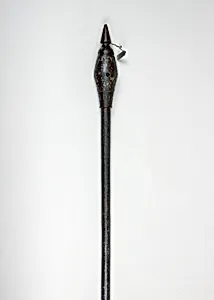
Mace
Unknown Artist
17th century
Medium
Steel, silver, turquoise
Dimensions
L. 28 3/8 in. (72.1 cm); W. 1 1/2 in. (3.8 cm); Wt. 2 lb. 2.8 oz. (986.6 g)
Classification
Shafted Weapons
Culture
Persian
Department
Arms and Armor
Museum
Metropolitan Museum of Art, New York, NY
Credit
Bequest of George C. Stone, 1935
Accession Number
36.25.1894
Rights
Public Domain
Art Historical Context
This exquisite 17th-century Persianace exemplifies the fusion of lethal functionality and opulent artistry in Safavid-era arms and armor. Measuring 28⅜ inches long and weighing over two pounds, its robust steel shaft and head were designed for crushing blows in cavalry combat, a hallmark of Persian warfare where mounted warriors wielded such shafted weapons with devastating effect. As a symbol of status, maces like this were often carried by nobility or military elite, blending battlefield utility with ceremonial prestige. The mace's surface gleams with intricate silver inlays and vibrant turquoise accents, showcasing masterful Persian metalworking techniques. Steel provided the durable core, while silver—likely damascened or overlaid—added shimmering patterns, and turquoise stones evoked the opulence of Persian jewelry traditions, sourced from nearby mines. These embellishments elevated the weapon from mere tool to treasured artifact, reflecting the cultural reverence for beauty even in instruments of war. On view in the Metropolitan Museum of Art's Arms and Armor department, this mace entered the collection through the 1935 bequest of George C. Stone, inviting visitors to ponder the artistry behind historical power.