
Madame Lvebout
1501 to 1550
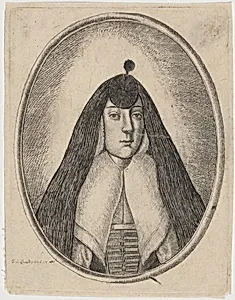
Medium
engraving
Dimensions
sheet (trimmed to platemark): 11.5 × 9 cm (4 1/2 × 3 9/16 in.)
Classification
Department
CG-E
Museum
National Gallery of Art, Washington, D.C.
Credit
Rosenwald Collection
Accession Number
1950.14.817
Rights
Public Domain
Art Historical Context
Nestled in the National Gallery Art's Rosenwald Collection *Madame Lvebout* is a delicate engraving by Peregrine Lovell, crafted sometime between 1501 and1550. This intimate portrait, trimmed to its platemark at just 11.5 × 9 cm, captures the likeness of its titular subject—a woman whose name suggests possible French or Flemish connections during the Renaissance era. Engravings like this were revolutionary, allowing artists to produce multiple impressions from a single metal plate incised with fine lines, making high-quality images accessible beyond elite patrons. Lovell's work exemplifies the technical precision of 16th-century printmaking, a period when Northern European artists elevated engraving to an art form rivaling painting. The small scale hints at its role as a collector's item or personal token, often carried in books of hours or portfolios. While little is documented about Lovell himself, his output reflects the era's fascination with individualized portraiture, bridging the gap between manuscript illumination and the coming age of mass-produced prints. Today, this classified print in the CG-E department invites visitors to appreciate the tactile artistry of intaglio techniques—where ink clings to etched grooves for rich tonal depth. A window into Renaissance ingenuity, *Madame Lvebout* reminds us how engravings democratized portraiture, preserving faces and stories across centuries.