
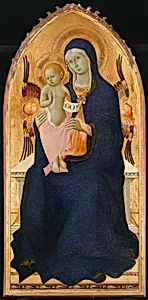
Madonna and Child Enthroned with Two Cherubim
1435–40
Medium
Tempera on wood, gold ground
Dimensions
Overall: 56 1/2 × 27 3/8 in. (143.5 × 69.5 cm)
Classification
Paintings
Culture
Italian, Siena
Department
Robert Lehman Collection
Museum
Metropolitan Museum of Art, New York, NY
Credit
Robert Lehman Collection, 1975
Accession Number
1975.1.41
Rights
Public Domain
Tags
Art Historical Context
Behold the serene *Madonna and Child Enthron with Two Cherubim a masterful tempera on wood panel by the enigmatic Osservanza Master, crafted in Siena, Italy, between 1435 and 1440. This 56½ × 27⅜-inch work from the Robert Lehman Collection at the Metropolitan Museum of Art the Virgin Mary enthroned, cradling the Christ Child, flanked by playful cherubim heads. The lavish gold ground—typical of Sienese panel painting—bathes the figures in a divine luminescence, evoking heavenly splendor and inviting devotion. Active in early Renaissance Siena, the Osservanza Master, likely linked to the Observant Franciscan convent of Santa Maria degli Angeli (La Osservanza), blended lingering International Gothic elegance with budding naturalism. Tempera technique, layering pigments with egg binder over meticulously prepared wood, allowed for luminous colors and fine details, like the Madonna's flowing robes and tender maternal gaze. Such images adorned altarpieces, fostering spiritual contemplation in churches and homes. This painting exemplifies Siena's enduring gold-ground tradition, even as Florentine innovations loomed nearby. The cherubim, symbols of celestial joy, frame the sacred duo, underscoring themes of divine love and incarnation central to 15th-century Italian piety—a timeless emblem of faith's gentle grace.