
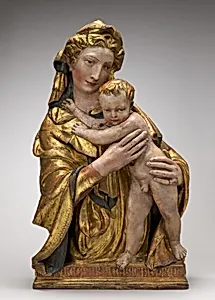
Madonna and Child
c. 1425
Medium
painted and gilded terracotta with wood backing
Dimensions
overall: 102.5 x 62.2 x 28.3 cm (40 3/8 x 24 1/2 x 11 1/8 in.)
Classification
Sculpture
Department
CSD
Museum
National Gallery of Art, Washington, D.C.
Credit
Samuel H. Kress Collection
Accession Number
1943.4.93
Rights
Public Domain
Art Historical Context
Step into the serene world of early Renaissance Florence with this captivating *Madonna and Child crafted around 1425 by an anonymousentine artist. Towering at over 40 inches tall, sculpture tenderly depicts the Virgin Mary cradling the infant Jesus, a quintessential devotional image that filled homes, chapels, and public spaces across 15th-century Italy. period marked the dawn of the Renaissance where artists began blending classical ideals of grace and naturalism with deep religious piety, making such works both spiritual touchstones and artistic innovations. Fashioned from terracotta—baked clay prized for its versatility and affordability—the piece is vividly painted and adorned with gleaming gold leaf, enhancing its luminous, otherworldly quality. The wood backing suggests it was designed for wall mounting, allowing it to serve as a focal point for prayer and contemplation. Gilding, a technique evoking divine light, was especially significant in Florentine workshops, where sculptors like the Della Robbia family popularized colorful glazed terracottas. Housed in the National Gallery of Art as part of the esteemed Samuel H. Kress Collection, this sculpture exemplifies the era's cultural devotion to the Madonna, symbolizing maternal love and salvation. Its survival offers a glimpse into the intimate faith of Renaissance Italians, inviting us to pause and reflect on timeless themes of tenderness and divinity.