
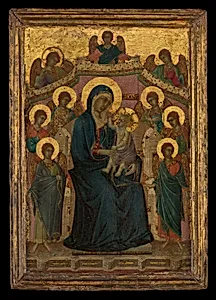
Madonna and Child with Nine Angels
ca. 1315
Medium
Tempera on panel
Dimensions
Left wing, overall, with engaged frame, 15 1/8 x 10 5/8 in. (38.4 x 27 cm); right wing, overall, with engaged frame, 15 x 10 5/8 in. (38.1 x 27 cm)
Classification
Paintings
Department
Robert Lehman Collection
Museum
Metropolitan Museum of Art, New York, NY
Credit
Robert Lehman Collection, 1975
Accession Number
1975.1.1
Rights
Public Domain
Tags
Art Historical Context
Nestled in the Robert Lehman Collection at the Metropolitan Museum of Art, *Madonna and Child with Angels* by Segna di Buonavent (active ca. 1290–1331) is a delicate diptych from around 1315. This Sienese master, influenced by the innovative Duccio di Buoninsegna, crafted these hinged panels—measuring about 15 x 10 ½ inches each—as a portable devotional object for private prayer. The tender depiction of the Virgin Mary cradling the Christ Child, surrounded by nine adoring angels, embodies the era's deep reverence for the sacred family, a motif central to Italian religious art. Painted in tempera on panel, the work showcases the meticulous egg-based medium that allowed for vibrant golds and rich blues, evoking heavenly radiance. Segna's style blends Gothic elegance with emerging naturalism: elongated figures, intricate drapery folds, and expressive faces reflect Siena's golden age of painting, where gold leaf grounds symbolized divine light. Such diptychs were treasured by affluent patrons for altarpieces or personal altars, bridging medieval piety and the dawn of Renaissance humanism. This intimate treasure invites visitors to ponder the spiritual intimacy of 14th-century Tuscany, where art served as a window to the divine. Its survival in pristine condition highlights the enduring allure of Sienese mastery.