
Maebyeong
Unknown Artist
12th century
Medium
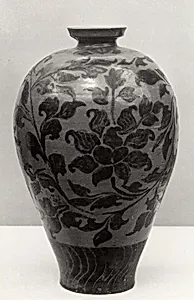
Stoneware with underglaze iron-brown decoration of peonies and floral scrolls under celadon glaze
Dimensions
H. 12 in. (30.5 cm)
Classification
Ceramics
Culture & Period
Korea · Goryeo dynasty (918–1392)
Department
Asian Art
Museum
Metropolitan Museum of Art, New York, NY
Credit
Fletcher Fund, 1927
Accession Number
27.119.13
Rights
Public Domain
Art Historical Context
This elegant *maebyeong*, a pear-shaped stoneware vase from Korea's Goryeo dynasty (918–1392), dates to the 12th century, a golden age for celadon ceramics. Standing at 12 inches tall, it exemplifies the period's mastery of high-fired stoneware, prized for its jade-green celadon glaze that evokes the luster of ancient jade. Produced in royal kilns, Goryeo celadons like this were exported across Asia, symbolizing Korea's artistic sophistication and Buddhist-influenced aesthetics. The vase's underglaze iron-brown decoration—featuring lush peonies and intricate floral scrolls—adds a striking contrast beneath the translucent celadon layer. This innovative technique, known as *sanggam* inlay in broader Goryeo practice, highlights the era's technical prowess: artisans painted designs with iron-rich slip before glazing and firing at intense temperatures, creating durable, crackled surfaces that enhanced the glaze's depth. Peonies, emblems of prosperity and spring's abundance, reflect the dynasty's cultural reverence for nature and imperial luxury. Acquired through the Fletcher Fund in 1927, this *maebyeong*—likely used for wine storage—captures Goryeo's blend of utility and artistry, inviting visitors to appreciate how everyday objects became transcendent treasures.