
Magdalena River, New Granada, Equador
Frederic Edwin Church, 1853
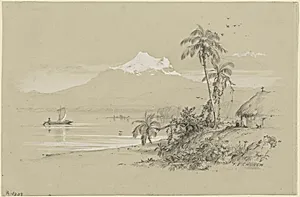
About this artwork
Frederic Edwin Church, a leading figure of the Hudson River School, created *Magdalena River, New Granada, Ecuador* in 1853 during one of his adventurous expeditions to South America. Inspired by explorer Alexander von Humboldt's romantic visions of exotic landscapes, Church traveled along the Magdalena River—then part of the Granadine Confederation (modern-day Colombia and Ecuador)—sketching nature's grandeur on-site. This intimate drawing captures the river's winding path amid lush tropical terrain, reflecting the 19th-century American fascination with sublime wilderness and scientific exploration. Rendered in graphite heightened with white on wove paper (18 × 27.2 cm), the work showcases Church's masterful preparatory technique. Graphite allowed for precise detailing of foliage, water, and light effects, while white heightening added luminosity, mimicking the play of sunlight on the river—a hallmark of his luminist style. Such sketches were vital studies for his monumental oil paintings, like *Heart of the Andes*, blending meticulous observation with spiritual awe. Housed in the National Gallery of Art's John Davis Hatch Collection, this drawing offers a window into Church's process, bridging fieldwork and grand canvas. It reminds visitors of how 19th-century artists documented vanishing frontiers, inviting us to trace the river's flow and ponder humanity's place in nature's vast theater.