
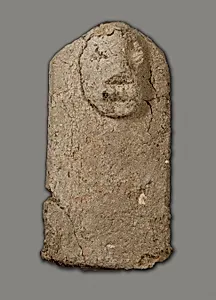
Magical Figure
Unknown Artist
ca. 1802–1550 B.C.
Medium
Clay (unfired)
Dimensions
H. 7.4 cm (2 15/16 in.); W. 3.8 cm (1 1/2 in.)
Classification
figure, magical, execration, tablet
Period
Late Middle Kingdom–Second Intermediate Period
Department
Egyptian Art
Museum
Metropolitan Museum of Art, New York, NY
Credit
Rogers Fund, 1933
Accession Number
33.1.78
Rights
Public Domain
Tags
Art Historical Context
This petite *Magical Figure*, crafted from unfired clay around 1802–1550 B.C., hails from Egypt's Late Middle Kingdom to Second Intermediate Period (Dynasty 13 through the Second Intermediate Period). just 7.4 cm tall, this enigmatic artifact exemplifies the era's turbulent times, marked by political fragmentation and the rise of foreign influences like the Hyksos. votive figures like this were commonplace in ancient Egyptian households and tombs, serving as talismans to ward off evil or invoke protection. The use of unfired clay—a soft, fragile medium—is particularly noteworthy. Unlike fired ceramics, these figures could be easily molded by hand and sometimes ritually broken during ceremonies, symbolizing the destruction of enemies or the fulfillment of magical rites. The prominent facial features, hinted at by its "Faces" tag, likely amplified its apotropaic power, channeling supernatural forces through exaggerated expressions typical of protective iconography. Acquired through the Rogers Fund in 1933 and now housed in the Metropolitan Museum of Art's Egyptian Art department, this figure offers a glimpse into everyday ancient Egyptian spirituality. Its survival underscores the enduring allure of objects that bridged the mortal and mystical worlds.