
Magical Figure
Unknown Artist
ca. 1802–1550 B.C.
Medium
Clay (unfired)
Dimensions
H. 5.5 cm (2 3/16 in.); W. 3.6 cm (1 7/16 in.)
Classification
figure, magical, execration, tablet
Period
Late Middle Kingdom–Second Intermediate Period
Department
Egyptian Art
Museum
Metropolitan Museum of Art, New York, NY
Credit
Rogers Fund, 1933
Accession Number
33.1.124
Rights
Public Domain
Tags
Art Historical Context
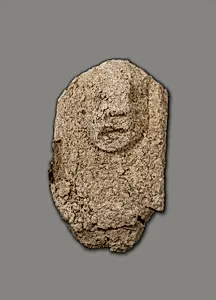
This petite *Magical Figure*, crafted from unfired clay around 1802–1550 B.C. during Egypt's Late Middle Kingdom to Second Intermediate Period (Dynasty 13– Intermediate Period), stands just 5.5 cm tall. Housed in the Metropolitan Museum of Art's Egyptian Art department (acquired via the Rogers in 1933), this unassuming artifact exemplifies the era's blend of political instability and enduring spiritual beliefs. As Egypt fragmented under weak pharaonic rule and emerging foreign influences like the Hyksos, people turned to personal magic for protection. Hand-modeled without firing, the figure's fragile medium highlights its ritual use—likely as a votive offering or apotropaic charm, meant to be buried, broken, or dissolved in spells rather than preserved eternally like glazed faience counterparts. Its stylized face, a key feature, may represent a deity, ancestor, or generic protector, invoking supernatural aid against misfortune, illness, or enemies. Such small-scale clay figurines were ubiquitous in domestic magic, reflecting the democratization of religious practices beyond temple elites. Though anonymous, the artist's skill in capturing expressive features on this tiny scale reveals sophisticated vernacular art. Imagine ancient Egyptians clutching it for luck— a timeless reminder of humanity's quest for control amid chaos. (198 words)