
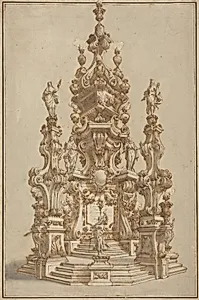
Magnificent Catafalque for a Deceased Noble
1651 to 1700
Medium
pen and brown ink with brown and gray washes over graphite on laid paper
Dimensions
overall: 52 x 34.9 cm (20 1/2 x 13 3/4 in.)
Classification
Drawing
Department
CG-E
Museum
National Gallery of Art, Washington, D.C.
Credit
Ailsa Mellon Bruce Fund
Accession Number
1990.9.1
Rights
Public Domain
Art Historical Context
This striking drawing by Francesco Galli Bibiena presents a richly imagined catafalque, the elaborate temporary structure used in Baroque-era funeral rites for European nobility. Created between 1651 and 1700, the design captures the period’s fascination with theatrical grandeur and solemn ceremony. Bibiena, a member of the celebrated Bibiena family of architects and stage designers, specialized in such visionary architectural fantasies, often intended as proposals for actual events or as works of art in their own right. Executed in pen and brown ink with layered brown and gray washes over graphite on laid paper, the drawing measures roughly 52 by 35 centimeters. The fluid technique allows Bibiena to suggest both sculptural detail and dramatic lighting, giving the towering monument a sense of depth and monumentality despite its two-dimensional format. Such works highlight the artist’s skill in transforming paper into a stage for opulent display. Catafalques like this one served not only as focal points for mourning but also as powerful statements of status and remembrance. Bibiena’s design reflects the cultural importance placed on public spectacle during the late seventeenth century, when art and architecture merged to honor the dead with awe-inspiring elegance.