
Mahakala Panjaranatha (Protector of the Tent)
Unknown Artist
late 14th–early 15th century
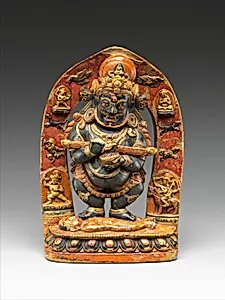
Medium
Steatite with color and gilding
Dimensions
H. 7 in. (17.8 cm); W. 4 1/2 in. (11.4 cm); D. 1 1/2 in. (3.8 cm)
Classification
Sculpture
Culture
Tibet
Department
Asian Art
Museum
Metropolitan Museum of Art, New York, NY
Credit
Gift of Florence and Herbert Irving, 2015
Accession Number
2015.500.4.18
Rights
Public Domain
Tags
Art Historical Context
**Mahakala Panjaranatha (ctor of the Tent)** *Unknown Artist, late 14th–early 15th century, Tibet *Steatite color and gilding H. 7 in. (17.8 cm)* *The Metropolitan Museum of Art, Art, Gift of Florence and Herbert, 2015* This steatite sculpture captures fierce visage of Mahakala Panjaranatha, a wrathful Tibetan Buddhist deity revered as a protector. Carved from soft, soapstone-like steatite in the late 14th to early 15th century—during a flourishing era of Vajrayana Buddhism in Tibet—the figure stands just 7 inches tall, adorned with vibrant colors and gilding that enhance its dynamic presence. Accompanied by birds and dogs, symbolic motifs evoking vigilance and ferocity, it exemplifies portable devotional art ideal for personal shrines or travel altars. Mahakala, the "Great Black One," guards practitioners from spiritual and physical harm, with "Panjaranatha" specifically denoting "Protector of the Tent." This title reflects Tibet's nomadic heritage and monastic encampments, where such guardians shielded against malevolent forces during journeys or rituals. The meticulous carving and applied pigments highlight Tibetan sculptors' skill in blending realism with divine intensity, making this piece a testament to Buddhism's integration of art and protection in everyday life. (198 words)