
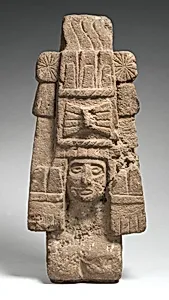
Maize Deity (Chicomecoatl)
Unknown Artist
15th–early 16th century
Medium
Basalt
Dimensions
H. 19 1/2 × W. 8 1/2 × D. 5 1/2 in. (49.5 × 21.6 × 14 cm)
Classification
Stone-Sculpture
Culture
Aztec
Department
Arts of Africa, Oceania, and the Americas
Museum
Metropolitan Museum of Art, New York, NY
Credit
Museum Purchase, 1900
Accession Number
00.5.28
Rights
Public Domain
Tags
Art Historical Context
Behold the *Maize Deity (Chicomecoatl)*, a striking basalt sculpture from Aztec culture, crafted between the 15th and 16th centuries. at 19 1/2 inches tall, this compact yet powerful figure captures Chicomecoatl, the goddess of maize and sustenance in Mesoamerican cosmology. Carved from dense volcanic basalt—a material prized by Aztec sculptors for its durability and fine grain—this piece exemplifies the technical mastery of pre-Columbian stonework, where artisans meticulously shaped hard stone using stone and wooden tools to evoke divine presence. Chicomecoatl's importance cannot be overstated in Aztec society, where agriculture underpinned empire and survival. As the deity embodying corn's life-giving essence, she symbolized fertility, abundance, and the cyclical rhythms of planting and harvest. Such sculptures likely served in temple rituals, offerings, or household shrines, bridging the mortal world and the divine. The figure's stylized form, typical of Aztec art, blends human and symbolic elements to convey sacred power. Acquired by the Metropolitan Museum of Art through purchase in 1900, this artwork offers a tangible link to the Aztec world just before Spanish conquest. It invites us to reflect on how ancient peoples honored the forces that fed their civilizations.