
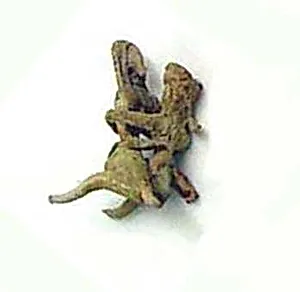
Male and Female Figures Joined
Unknown Artist
ca. 2700–3000 BCE
Medium
Terracotta
Dimensions
H. 3 3/4 in. (9.5 cm); W. 2 3/4 in. (7 cm); D. 2 1/4 in. (5.7 cm)
Classification
Ceramics
Culture
Baluchistan
Department
Asian Art
Museum
Metropolitan Museum of Art, New York, NY
Credit
Gift of Jeannette and Jonathan Rosen, 2001
Accession Number
2001.794.213
Rights
Public Domain
Tags
Art Historical Context
This charming terracotta figurine, titled *Male and Female Figures Joined hails from ancient Baluchistan around 2700–3000 BCE, a region on the fringes of the Indus Civilization. Standing just 3¾ inches tall, this hand-modeled ceramic sculpture depicts a stylized pair of human figures intimately intertwined, their forms simplified into smooth, rounded contours that emphasize unity and harmony. Crafted from fired clay—a common and enduring medium in prehistoric South Asia—the piece reflects early mastery of ceramic techniques, likely coil-built and low-fired for ritual or domestic use. Dating to the Chalcolithic period, it offers a glimpse into the spiritual and social world of Indus Valley peoples, where such paired figures often symbolized fertility, marital bonds, or divine couples central to agrarian life. The emphasis on gender complementarity, echoed in the artwork's tags linking it to women and Indus Valley themes, underscores the culture's reverence for life's cycles amid burgeoning urban centers like Mehrgarh. Though the artist remains unknown, the figurine's compact scale suggests it served as a votive offering, talisman, or household idol. Today, this rare survivor graces the Metropolitan Museum of Art's Asian Art department, a generous gift from Jeannette and Jonathan Rosen in 2001, inviting us to ponder the timeless human quest for connection across millennia.