
Male Dancing Dwarf
Unknown Artist
mid-18th century
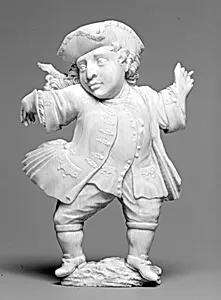
Medium
Ivory: base: ivory and wood
Dimensions
Height: 5 1/4 in. (13.3 cm); Height (base): 2 1/4 in. (5.7 cm)
Classification
Sculpture-Miniature
Culture
German or Netherlandish
Department
European Sculpture and Decorative Arts
Museum
Metropolitan Museum of Art, New York, NY
Credit
Gift of Alfred and Victoria Harris, 1976
Accession Number
1976.422.2a, b
Rights
Public Domain
Tags
Art Historical Context
Step into the whimsical world of 18th-century European decorative arts with *Male Dancing Dwarf*, a delightful miniature ivory sculpture from the mid-1700s, likely crafted by a German or Netherlandish artist Standing just 5¼ inches tall (13.3 cm) atop a 2¼-inch (5.7 cm) base of ivory and wood, tiny figure captures a lively dancer mid-movement, his form frozen in exuberant joy. Housed in the Metropolitan Museum of Art's Department of European Sculpture and Decorative Arts—thanks to a 1976 gift from Alfred and Victoria Harris—it exemplifies the era's fascination with playful, intimate collectibles. Ivory carving reached exquisite heights during the Rococo period, a time of ornate elegance and lighthearted themes across German and Netherlandish workshops. Artisans employed fine tools to sculpt hyper-detailed features—from the dwarf's expressive face and dynamic pose to the textured clothing—showcasing technical virtuosity in a medium prized for its creamy translucency and workability. Miniature sculptures like this were cherished by collectors for display in cabinets of curiosities, blending artistry with portability. Culturally, depictions of dancing dwarfs echoed the historical role of these figures as court entertainers, infusing art with humor and humanity. This piece not only highlights the craftsmanship of anonymous masters but also invites us to appreciate the Rococo spirit of revelry and refinement.