
Male figure (tiki) representing the deity Rongo
Unknown Artist
Early 19th century
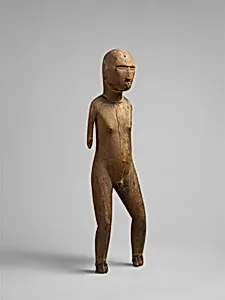
Medium
Wood
Dimensions
H. 38 3/4 in. × W. 10 in. × D. 8 1/4 in. (98.4 × 25.4 × 21 cm)
Classification
Wood-Sculpture
Culture
Mangarevan people
Department
Arts of Africa, Oceania, and the Americas
Museum
Metropolitan Museum of Art, New York, NY
Credit
The Metropolitan Museum of Art, New York, The Michael C. Rockefeller Memorial Collection, Bequest of Nelson A. Rockefeller, 1979
Accession Number
1979.206.1466
Rights
Public Domain
Tags
Art Historical Context
This striking wooden tiki figure, by an unknown Mangarevan artist in the early 19th century, the Polynesian deity Rongo, associated with fertility, agriculture, and peace across Pacific cultures. Standing nearly 39 inches tall, the sculpture's robust, stylized male form—with its characteristic exaggerated features, broad shoulders, and simplified anatomy—exemplifies the tiki tradition of the Mangareva Islands in French Polynesia. Crafted from dense wood, likely using traditional adzes and chisels, it captures the essence of divine power through smooth, polished surfaces and a frontal, imposing pose. In Mangarevan society, such figures held profound spiritual significance, serving as focal points for rituals, offerings, and ancestor veneration before widespread European contact and Christianization in the 19th century. The nude male form underscores themes of vitality and potency, common in Oceanic art where deities were anthropomorphized to bridge the human and supernatural worlds. This rare survivor offers a window into pre-colonial Mangarevan cosmology and craftsmanship. Now part of The Metropolitan Museum of Art's Michael C. Rockefeller Memorial Collection, this tiki invites visitors to reflect on the enduring legacy of Polynesian artistry, blending raw natural materials with profound cultural symbolism.