
Man
second half 18th century
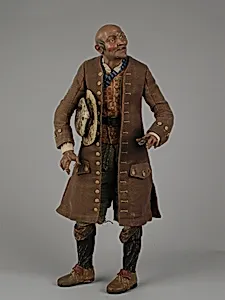
Medium
Polychromed terracotta head and wooden limbs; body of wire wrapped in tow; cotton and silk garments with silver thread-wrapped buttons; leather belt with gold buckle
Dimensions
H. 15 7/8 in. (40.3 cm.)
Classification
Crèche
Culture
Italian, Naples
Department
European Sculpture and Decorative Arts
Museum
Metropolitan Museum of Art, New York, NY
Credit
Gift of Loretta Hines Howard, 1964
Accession Number
64.164.101
Rights
Public Domain
Tags
Art Historical Context
This exquisite terracotta figure, titled *Man* by Neapolitan artist Lorenzo Mosca from the second half of the 18th century, embodies pinnacle of Naples' renowned crèche tradition. Crafted as part of elaborate *presepi*—elaborate nativity scenes central to Christmas celebrations in southern Italy—the sculpture depicts a lifelike male figure, likely a shepherd or bystander in the Holy Family's story. Measuring just 15⅞ inches tall, its polychromed terracotta head captures intricate facial details and expressive features, while wooden limbs, a wire-and-tow body, and finely tailored cotton-silk garments with silver-thread buttons and a leather belt add remarkable realism. Mosca's masterful techniques highlight the artistic innovation of 18th-century Neapolitan workshops, where sculptors blended painting, carving, and textiles to create figures that seem poised to step into the scene. The vivid polychromy and luxurious fabrics not only enhance lifelike movement but also reflect the era's Baroque emphasis on theatricality and devotion, making these crèches beloved in aristocratic homes and churches. Today, this gift to the Metropolitan Museum of Art from Loretta Hines Howard in 1964 invites visitors to appreciate Naples' cultural heritage, where art bridged faith and folklore in vividly human form.