
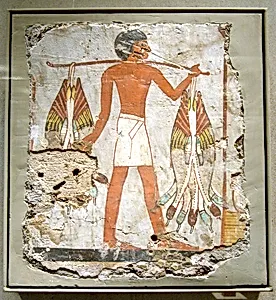
Man Carrying Ducks
Unknown Artist
ca. 1550–1295 B.C.
Medium
Tempera on mud plaster
Dimensions
H. 13 cm (5 1/8 in.); W. 11.5 cm (4 1/2 in.)
Classification
Wall painting, man, ducks, yoke
Period
New Kingdom
Department
Egyptian Art
Museum
Metropolitan Museum of Art, New York, NY
Credit
Gift of Bashford Dean, 1906
Accession Number
06.1332.1
Rights
Public Domain
Tags
Art Historical Context
This small yet evocative fragment from Egypt’s Kingdom, Dynasty 18, captures a moment of everyday life that once adorned a tomb or chapel wall. Created around 1550–1295 B.C., the scene shows a man carrying ducks, a motif frequently included in tomb paintings to symbolize offerings and the abundance meant to sustain the deceased in the afterlife. Such images reflect the Egyptians’ belief that depictions of food and provisions could magically provide for eternity. Painted in tempera on mud plaster, the work exemplifies the practical yet beautiful techniques of ancient Egyptian artists. Mud plaster provided an affordable surface for large-scale decoration, while the tempera medium allowed for bright, lasting colors. Though now only 13 by 11.5 centimeters, the piece originally formed part of a larger narrative, reminding viewers of the interconnectedness between daily activities and spiritual beliefs. Acquired by the Metropolitan Museum in 1906 as a gift from Bashford Dean, this fragment offers a glimpse into the vibrant visual world of Dynasty 18 Egypt, where even humble scenes carried profound meaning.