
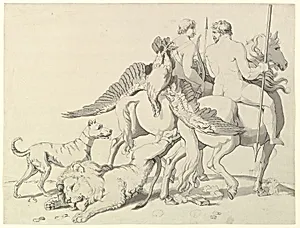
Man's Fortitude
late 18th–early 19th century
Medium
Pen and black ink, brush and gray wash, over graphite
Dimensions
sheet: 14 3/16 x 18 11/16 in. (36 x 47.5 cm)
Classification
Drawings
Department
Drawings and Prints
Museum
Metropolitan Museum of Art, New York, NY
Credit
The Elisha Whittelsey Collection, The Elisha Whittelsey Fund, 2011
Accession Number
2011.266
Rights
Public Domain
Tags
Art Historical Context
Johann Heinrich Wilhelm Tischbein, a prominent German artist from the esteemed Tischbein family of painters active in the late 18 century, created *Man's Fortitude* the transitional period from Neoclassicism to early Romanticism. This intricate drawing, executed in pen and black ink with brush and gray wash over graphite, the meticulous draftsmanship prized in European academies of the era. Measuring 14 3/16 x 18 11/16 inches, it belongs to the Metropolitan Museum of's Elisha Whittelsey Collection, highlighting Tischbein's skill in preparatory studies that often bridged studio practice and finished works. The composition centers on a male nude embodying human fortitude, surrounded by powerful animals—lions, horses, dogs, and birds—that evoke strength, loyalty, and nobility. Such allegorical imagery draws from classical antiquity, where the nude male figure symbolized moral and physical virtue, a theme resonant in Enlightenment ideals of reason triumphing over adversity. Tischbein's fluid lines and subtle gray washes create depth and drama, animating the scene with dynamic tension between man and beast. As a rare surviving drawing by Tischbein, known primarily for portraits like his famous depiction of Goethe, *Man's Fortitude* offers insight into his exploration of heroic themes. It invites visitors to ponder the timeless celebration of resilience amid nature's raw power.