
Man's Robe
Unknown Artist
early 17th century
Medium
Silk; metal; linen
Dimensions
From center back neck: 52 3/4 x 103 1/2 in. (circumference of hem) (134 x 262.8 cm)
Classification
Textiles-Velvets
Culture
Italian or British
Department
Robert Lehman Collection
Museum
Metropolitan Museum of Art, New York, NY
Credit
Robert Lehman Collection, 1975
Accession Number
1975.1.1814
Rights
Public Domain
Art Historical Context
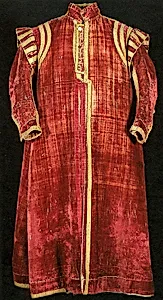
Step into the opulent world of 17th-century fashion with this stunning *Man's Robe*, a masterpiece of textile artistry from the early 1600s. Crafted from luxurious silk velvet adorned with shimmering metal threads and lined in linen, the robe measures an impressive 52¾ inches from the center back neck to a hem circumference of 103½ inches—designed to drape dramatically on a noble figure. Its classification as a velvet textile underscores the era's fascination with rich, tactile fabrics that caught the light in lavish interiors. Possibly of Italian or British origin, this robe reflects the Baroque period's emphasis on grandeur and display. Velvets like this were woven with intricate pile techniques, where cut loops of silk created a plush surface, often enhanced by metal-wrapped threads for a regal gleam symbolizing wealth and status. Worn by elite men for ceremonial occasions or portraits, such garments bridged art and attire, showcasing the technical prowess of European weavers amid rising global trade in silks. Now part of the Robert Lehman Collection at The Metropolitan Museum of Art (acquired in 1975), this robe invites us to appreciate the unsung artistry of anonymous craftsmen. Its survival offers a tangible link to the splendor of courtly life, reminding visitors of textiles' enduring role as cultural treasures.