
Mandarin ducks
1830s
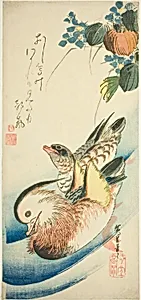
Medium
Color woodblock print; otanzaku
Dimensions
38.2 × 17.6 cm (15 × 6 7/8 in.)
Classification
woodblock print
Department
Arts of Asia
Museum
Art Institute of Chicago
Accession Number
87044
Rights
Public Domain
Art Historical Context
Utagawa Hiroshige1797–1858), one of Japan's most celebrated ukiyo-e masters, created *Mandarin Ducks* in the 1830s as a color woodblock print in the elegant otanzaku format—a tall, narrow design (38.2 × 17.6 cm) ideal for hanging like a scroll in homes. This intimate scale suited Hiroshige's delicate depictions of nature, shifting from his famous landscape series like *The Fifty-three Stations of the Tōkaidō* to serene bird-and-flower motifs popular in Edo-period Japan. The print showcases Hiroshige's mastery of woodblock techniques, where intricate carvings on wooden blocks allowed vibrant colors—layered inks in blues, reds, and golds—to capture the ducks' iridescent feathers and rippling water. Mandarin ducks, symbols of conjugal love and fidelity in Japanese culture (as they mate for life), add poetic depth, evoking themes of harmony amid the transient beauty celebrated in ukiyo-e, or "pictures of the floating world." Housed in the Art Institute of Chicago's Arts of Asia department, this work highlights the technical innovation and aesthetic refinement of 19th-century Japanese printmaking, bridging art and everyday life for a burgeoning urban audience.
About the Artist
Utagawa Hiroshige · 1826–1869
Utagawa Hiroshige (1797–1858), born Andō Tokutarō, was the last great master of Japanese ukiyo-e woodblock printmaking and one of the most influential landscape artists in history. Born in Edo (modern Tokyo) into a low-ranking samurai family serving as fire wardens, Hiroshige transformed landscape printmaking into a poetic meditation on nature, weather, and everyday life. His revolutionary approac...