
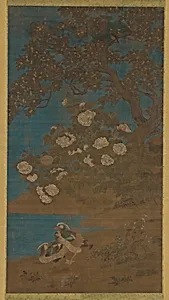
Mandarin ducks and flowers
Classification
Painting
Department
Smithsonian Collection
Museum
Smithsonian American Art Museum
Credit
Gift of Charles Lang Freer
Accession Number
F1917.124
Rights
Public Domain
Tags
About this artwork
To 1917
Art Historical Context
This delicate painting, *Mandarin Ducks and Flowers*, dates to the 17th and was once attributed to the 11th-century artist Xu Chongsi, though its later creation reflects the enduring tradition of emulating earlier masters in Chinese art. mandarin ducks—symbols of conjugal love and fidelity in Chinese culture—amidst vibrant hibiscus blooms, the work captures nature's harmony, a common motif in East Asian painting that evokes wishes for marital bliss and prosperity. Produced during the transitional Ming (1368–1644) or early Qing (1644–1911) dynasty, it exemplifies the refined aesthetic of Chinese flower-and-bird paintings, where subjects like ducks and flowers conveyed deeper moral and poetic meanings. Though the medium is unknown, such works typically employed ink and light colors on silk or paper, showcasing meticulous brushwork that prioritizes elegance over realism. A cherished piece from the Charles Lang Freer collection, gifted to the Smithsonian American Art Museum, it highlights Freer's passion for Asian art and bridges centuries of cultural exchange, inviting viewers to ponder timeless themes of love and beauty.