
Mandira
Unknown Artist
19th century
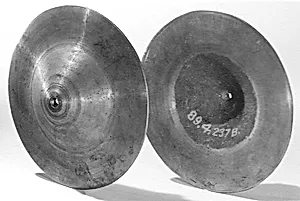
Medium
Brass or bronze
Dimensions
a: D. 8.8 cm., pitch E-b, weight 161 g. b: D. 8.8 cm., pitch E, weight 171 g.
Classification
Idiophone-Concussion
Culture
Indian
Department
Musical Instruments
Museum
Metropolitan Museum of Art, New York, NY
Credit
The Crosby Brown Collection of Musical Instruments, 1889
Accession Number
89.4.237a, b
Rights
Public Domain
Art Historical Context
Nestled in the Metropolitan Museum of Art's Crosby Brown Collection of Musical Instruments acquired in 1889 the *Mandira* represents a charming example of 19th-century Indian idiophones. These small, paired cymbals—crafted from brass or bronze, each with a diameter of 8.8 cm—are designed to clash together, producing sharp, resonant tones. Object 'a' weighs 161 grams and yields a pitch of E-b, while 'b' at 171 grams sounds E, showcasing subtle variations that allow for nuanced rhythms. In Indian musical traditions, mandiras (also known as kartals) play a vital role in classical performances, folk dances, and devotional music. Struck rhythmically by the fingers or hands, they provide crisp accents that punctuate melodies on stringed or wind instruments like the sitar or bansuri. Their concussion-based sound—where the metal vibrates upon impact—highlights the ingenuity of ancient metallurgical techniques, ensuring durability and bright timbre suited to both temple rituals and lively kathak dance accompaniments. This artifact offers a window into India's rich sonic heritage, where everyday objects double as artful tools for cultural expression. Visitors can almost hear the lively clatter evoking bustling festivals or serene pujas from the colonial era.