
Mangle-board
Unknown Artist
1776
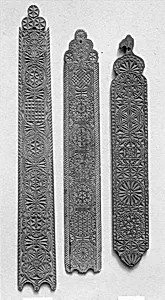
Medium
Oak
Dimensions
30 3/4 × 4 3/4 in. (78.1 × 12.1 cm)
Classification
Woodwork-Furniture
Culture
Dutch
Department
European Sculpture and Decorative Arts
Museum
Metropolitan Museum of Art, New York, NY
Credit
Rogers Fund, 1911
Accession Number
11.64.1
Rights
Public Domain
Art Historical Context
Step into the world of 18th-century Dutch domestic life with this oak *Mangle-board* from 1776, a finely crafted piece of functional woodwork now housed in the Metropolitan Museum Art's European Sculpture andative Arts collection. Measuring 30 3/4 × 4 3/4 inches, this sturdy board was an essential component of a mangle—a traditional laundry device used to smooth and press linens, clothing, and household textiles by rolling them between a wooden roller and the board itself. Crafted from durable oak, a favored hardwood in the Netherlands for its strength and workability, it exemplifies the blend of utility and craftsmanship typical of Dutch vernacular furniture. Created by an unknown artist during a time when the Dutch Republic was transitioning from its Golden Age prosperity, this object reflects everyday ingenuity in colonial-era households. Mangling was a laborious chore often performed by women, and such boards were prized possessions, sometimes passed down through generations. Its classification as woodwork-furniture highlights the artistic merit in everyday items, where skilled joinery and shaping techniques transformed simple tools into enduring heirlooms. Acquired through the Rogers Fund in 1911, this *Mangle-board* offers museum visitors a tangible link to pre-industrial routines, reminding us how ordinary objects embodied cultural values of thrift, cleanliness, and meticulous care in Dutch society.