
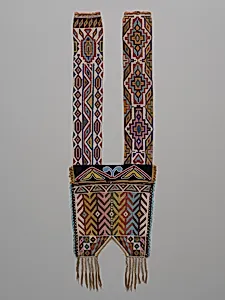
Man's Shoulder Bag
c. 1875–1900
Medium
Linen, cotton cloth, and glass beads
Dimensions
80.7 × 28.8 × 1 cm (31 3/4 × 11 5/16 × 3/8 in.); With fringe: H.: 92.4 cm (36 7/16 in.)
Classification
beadwork
Department
Arts of the Americas
Museum
Art Institute of Chicago
Accession Number
156578
Rights
Public Domain
Art Historical Context
This exquisite Man's Shoulder Bag, crafted by the Winnebago (Ho-Chunk) people 1875–1900, the artistry of Great Lakes Native American beadwork Made from linen and cotton cloth—likely traded European materials—and adorned with vibrant glass beads, the bag measures 80.7 28.8 × 1 cm, extending to 92.4 cm with its fringe. Such shoulder bags were practical accessories for men, used to carry essentials like pipes, tobacco, or personal items during travel or ceremonies. Beadwork like this flourished in the late 19th century amid cultural transitions, as Ho-Chunk communities adapted traditional techniques to incorporate glass beads introduced through trade. The meticulous application of beads, often in geometric patterns symbolizing clan motifs or spiritual beliefs, showcases skilled embroidery stitches that create durable, colorful designs. This piece reflects resilience, blending indigenous creativity with available resources during a time of reservation life and rapid change. Housed in the Art Institute of Chicago's Arts of the Americas department, the bag invites visitors to appreciate the precision and cultural pride embedded in every bead, a testament to Ho-Chunk ingenuity that endures today.