
Mantle
Unknown Artist
4th–6th century
Medium
Wool
Dimensions
H. 9 15/16 in. 25.3 cm) W. 38 3/16 in. (97 cm)
Classification
Textiles
Department
Islamic Art
Museum
Metropolitan Museum of Art, New York, NY
Credit
Gift of Maurice Nahman, 1912
Accession Number
12.185.1
Rights
Public Domain
Art Historical Context
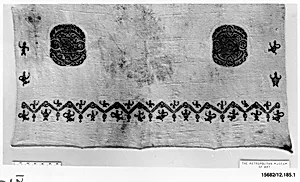
This exquisite wool mantle, crafted by an unknown artist between the 4th and 6th centuries, offers a glimpse into the textile artistry of Late Antiquity. Measuring just under 10 inches high but an impressive 38 inches wide, it likely served as a shawl, cloak, or ceremonial garment, the body in the soft durability of wool—a practical yet luxurious fiber prized in the ancient Near East and Mediterranean world. Housed in the Metropolitan Museum of Art's Islamic Art department, this piece reflects the cultural continuum from pre-Islamic societies to the early Islamic era, where textiles were not only functional but symbols of status, trade, and craftsmanship. Woven with precision, the mantle exemplifies early textile techniques such as tapestry or weft-faced weaving, common in regions like Egypt or Persia during this period. Wool's versatility allowed for vibrant dyes and intricate patterns, though specifics of its decoration remain a tantalizing mystery. Its survival speaks to the ingenuity of ancient weavers, who produced items for daily wear and elite wardrobes amid flourishing trade routes. A generous gift from collector Maurice Nahman in 1912, this mantle invites us to ponder the lives it adorned—perhaps a merchant in bustling Alexandria or a nomad traversing deserts. In the Met's collection, it bridges history's threads, reminding us how everyday fabrics wove the tapestry of civilizations. (198 words)