
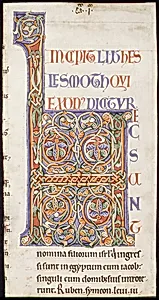
Manuscript Illumination with Initial H, from a Bible
Unknown Artist
ca. 1175–95
Medium
Tempera and gold on parchment
Dimensions
11 5/8 x 6in. (29.5 x 15.2cm) Mat: 19 1/4 × 14 1/4 in. (48.9 × 36.2 cm)
Classification
Manuscripts and Illuminations
Culture
French
Department
The Cloisters
Museum
Metropolitan Museum of Art, New York, NY
Credit
The Cloisters Collection, 1999
Accession Number
1999.364.1
Rights
Public Domain
Tags
Art Historical Context
This exquisite manuscript illumination, created in France around 1175–95, once adorned a large Bible used in a monastic or cathedral setting. Painted in tempera with luminous gold on parchment, the initial “H” served as a decorative gateway into sacred text, transforming the written word into a visual experience of reverence. Such illuminations were crafted by skilled monastic artists who blended calligraphy, color, and precious metals to honor Scripture and guide the faithful during liturgical readings. The work reflects the Romanesque era’s emphasis on clarity, symmetry, and spiritual symbolism. Gold leaf, applied with meticulous care, would have caught the flickering light of candles, evoking divine radiance and underscoring the Bible’s central role in medieval Christian life. Though the artist remains unknown, the piece exemplifies the high level of craftsmanship achieved in French scriptoria during the late twelfth century. Housed today in The Met Cloisters, this fragment offers visitors a tangible connection to the devotional practices of the Middle Ages, reminding us how art and faith were seamlessly intertwined in the making of sacred books.