
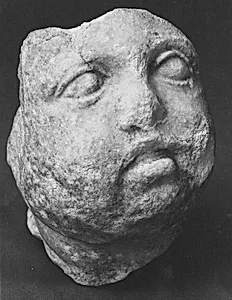
Marble head of a boy
Unknown Artist
1st century CE
Medium
Marble
Dimensions
Overall: 4 7/8 x 3 1/8 x 4 in. (12.4 x 7.9 x 10.2 cm)
Classification
Stone Sculpture
Culture & Period
Roman · Early Imperial
Department
Greek and Roman Art
Museum
Metropolitan Museum of Art, New York, NY
Credit
Gift of Philip M. Lydig, 1911
Accession Number
11.13.2
Rights
Public Domain
Tags
Art Historical Context
This delicate marble head of a boy carved in the Early Imperial Roman period (1st century), captures the tender features of youth with remarkable sensitivity. Measuring just under 5 inches tall, it exemplifies the precision of Roman stone sculpture, where artists skillfully rendered soft facial contours, curly hair, subtle expressions using fine-grained marble. This prized medium allowed for a lifelike polish that mimicked skin and evoked classical ideals of beauty and innocence. In Roman culture, such portrait heads often adorned larger statues, busts, or funerary monuments, serving as memorials to beloved children or symbols of familial piety. Dating to the era of emperors like Augustus and Tiberius, the piece reflects the blend of Greek-inspired idealism and Roman realism that defined imperial art—prioritizing individualized features while celebrating youthful vitality. Though the artist remains unknown, the craftsmanship highlights the technical mastery of Roman workshops. Today, housed in the Metropolitan Museum of Art's Greek and Roman Art department (gift of Philip M. Lydig, 1911), this head invites visitors to ponder the universal emotions of parenthood and loss in antiquity, bridging 2,000 years of human experience.