
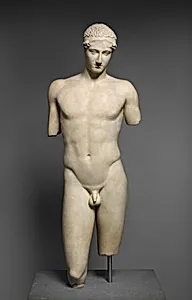
Marble statue of the so-called Stephanos Athlete
Unknown Artist
late 1st century BCE or 1st century CE
Medium
Marble
Dimensions
H.: 43 1/4 in. (109.9 cm)
Classification
Stone Sculpture
Culture & Period
Roman · Early Imperial
Department
Greek and Roman Art
Museum
Metropolitan Museum of Art, New York, NY
Credit
Gift of Jan and Ellin Mitchell, 1962
Accession Number
62.4
Rights
Public Domain
Tags
Art Historical Context
Behold the *Marble Statue of the So-Called Stephanos Athlete*, captivating example of Early Imperial Roman sculpture from the late 1st century BCE 1st century CE.ved from fine marble and standing at 43¼ inches (109.9 cm) tall, this life-sized figure depicts a youthful male nude, likely an athlete crowned with a *stephanos*—a victory wreath symbolizing triumph in ancient games. Though the artist remains unknown, the work exemplifies Roman mastery in stone sculpture, housed today in the Metropolitan Museum of Art's Greek and Roman Art Department as a generous gift from Jan and Ellin Mitchell in 1962. This statue reflects Rome's deep admiration for Greek athletic ideals, blending Hellenistic realism with Imperial elegance during the era of Augustus and his successors. Male nudes like this celebrated the perfect male form—muscular yet graceful—evoking the heroic athletes of Olympia or Delphi. Marble, prized for its durability and ability to mimic skin's luster through polishing, allowed sculptors to achieve lifelike anatomy and dynamic poses, techniques honed from copying renowned Greek bronzes. Culturally, such figures adorned villas, baths, and gymnasia, inspiring viewers with virtues of strength and discipline. Gaze upon the *Stephanos Athlete* and imagine the roar of ancient crowds honoring a champion— a timeless testament to the human body's enduring beauty.