
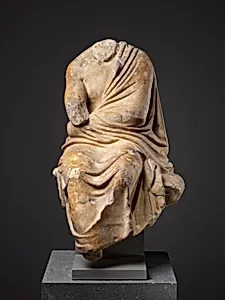
Marble statuette of a seated philosopher
Unknown Artist
1st or 2nd century CE
Medium
Marble
Dimensions
H. 21 7/16 in. (54.4 cm)
Classification
Stone Sculpture
Culture & Period
Roman · Imperial
Department
Greek and Roman Art
Museum
Metropolitan Museum of Art, New York, NY
Credit
Fletcher Fund, 1924
Accession Number
24.73
Rights
Public Domain
Tags
Art Historical Context
This exquisite marble statuette of a seated philosopher, dating to the 1st or 2nd century CE captures the intellectual spirit of the Roman Imperial period. Carved from fine white marble, the figure stands about 21 inches tall, making it a portable yet monumental work likely intended for a private study, library, or household shrine. The unknown Roman sculptor skillfully rendered the philosopher in a contemplative pose—seated with draped robes and a thoughtful demeanor—evoking the revered tradition of Greek philosophy that profoundly influenced Roman culture. During the Imperial era, Romans embraced Hellenistic ideals, commissioning such statuettes to honor thinkers like Socrates or the Stoics, symbolizing wisdom and moral virtue amid the empire's vast expansion. Marble, prized for its durability and ability to hold intricate details like the folds of the himation (Greek-style cloak), allowed for a lifelike polish that brought the figure to vivid life. These sculptures bridged art and philosophy, serving as inspirational talismans for educated elites. Acquired through the Fletcher Fund in 1924, this piece now graces the Metropolitan Museum of Art's Greek and Roman Art department, offering visitors a tangible link to antiquity's pursuit of knowledge. Pause and ponder: what timeless questions might this silent sage still whisper today?