
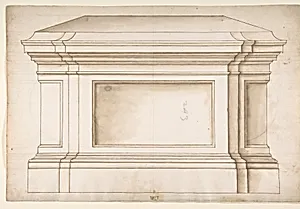
Marcus Aurelius Statue, pedestal, elevation (recto) Marcus Aurelius Statue, pedestal, plan (verso)
early to mid-16th century
Medium
Dark brown ink, black chalk, and incised lines
Dimensions
sheet: 17 3/16 x 11 9/16 in. (43.7 x 29.3 cm)
Classification
Drawings
Department
Drawings and Prints
Museum
Metropolitan Museum of Art, New York, NY
Credit
Gift of Janos Scholz and Anne Bigelow Scholz, in memory of Flying Officer Walter Bigelow Rosen, RCAF, 1949
Accession Number
49.92.65
Rights
Public Domain
Tags
Art Historical Context
This exquisite 16th-century drawing captures precise architectural details of the pedestal for the ancient Roman equestrian statue of Emperor Marcus Aurelius, one of antiquity's most iconic bronzes. The recto features an elevation view, showcasing the pedestal's elegant proportions and decorative elements, while the verso presents a detailed plan, offering insight into its structural design. Created anonymously by a French artist in the early mid-1500s using dark brown ink, black, and incised lines this sheet measures 17 3/16 x 11 9/16 inches and exemplifies Renaissance draftsman's precision. The Marcus Aurelius statue, perched on Rome's Capitoline Hill since the late 15th century, symbolized imperial power and Stoic philosophy, sparking renewed fascination among Renaissance scholars and artists. This drawing reflects France's growing interest in classical antiquities during the era of Francis I, when Italian influences flooded northern Europe through prints and travel. Techniques like incised lines—scratched into the paper for tracing or transfer—highlight practical workshop methods, blending artistry with engineering. Housed in the Metropolitan Museum of Art's Drawings and Prints department, gifted by Janos and Anne Bigelow Scholz, this work bridges ancient Rome and Renaissance revival, inviting us to appreciate how 16th-century minds meticulously revived imperial grandeur. A testament to enduring classical allure!