
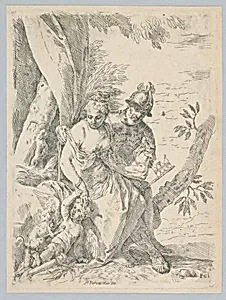
Mars, Venus, et l'Amour
Medium
figures
Classification
figures
Department
Smithsonian Collection
Museum
Smithsonian American Art Museum
Credit
Smithsonian American Art Museum
Accession Number
1896-31-45
Rights
Public Domain
About this artwork
Research in Progress
Art Historical Context
Simone Cantarini's *Mars, Venus, l'Amour*, created around 1640, captures timeless mythological trio: the Roman god of war, Mars; the goddess of love, Venus; Cupid, the mischievous embodiment of desire. This Italian Baroque artist from Pesaro (1612–1648), often called "il Pesarese," drew inspiration from masters like Guido Reni, elegant forms with emotional intensity. Housed in the Smithsonian American Art Museum's of figures, the work exemplifies Cantarini's skill in rendering dynamic human figures, likely in a sculptural medium that invites tactile appreciation. In the Baroque era, such mythological scenes symbolized the eternal tension between war and love, reflecting 17th-century Europe's fascination with classical antiquity amid religious and political turmoil. Cantarini's figures would have showcased the period's hallmarks—dramatic poses, soft modeling, and a sense of movement—making intimate narratives feel grand and alive. Though research on this piece is ongoing, it highlights how Baroque artists humanized gods to explore universal passions. Visitors to the Smithsonian will find this artwork a delightful window into Italy's artistic golden age, where sculpture and painting converged to celebrate beauty's triumph over conflict. A perfect gem for pondering love's playful conquests!