
Marsh-Bowl of Rennefer
Unknown Artist
ca. 1504–1447 B.C.
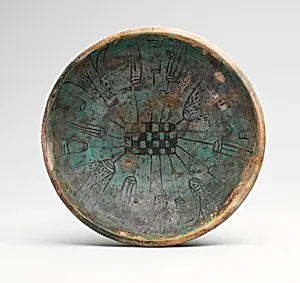
Medium
Faience, paint
Dimensions
H. 5.9 cm (2 5/16 in.); Diam. of rim 20.7 cm (8 1/8 in.); Diam. of base 5.9 cm (2 5/16 in.); Th. of rim. 0.6 cm (1/4 in.)
Classification
Bowl, Nun, pool, lotus, marsh, Rennefer
Period
New Kingdom
Department
Egyptian Art
Museum
Metropolitan Museum of Art, New York, NY
Credit
Rogers Fund, 1935
Accession Number
35.3.77
Rights
Public Domain
Art Historical Context
Step into the vibrant world of ancient Egypt with the *Marsh-Bowl of Renfer*, a delicate faience vessel from the New Kingdom, Dynasty 18 (ca. 1504–1447 B.C.). Crafted during a golden age of pharaonic power under rulers like Thutmose I, this shallow bowl—measuring just 5.9 cm high with an 20.7 cm rim diameter—likely served as a luxurious offering dish or ceremonial item. Its name evokes the lush Nile marshes, a motif symbolizing abundance, fertility, and the eternal cycle of life central to Egyptian beliefs. Made of faience, a sophisticated composite of crushed quartz glazed to mimic semiprecious stones like turquoise or lapis lazuli, the bowl was enhanced with paint for vivid colors that have endured millennia. This technique, perfected in the New Kingdom, allowed artisans to create shimmering, jewel-like surfaces affordable yet opulent, often reserved for elite tombs or temples. The thin 0.6 cm rim underscores its refined craftsmanship, balancing fragility with functionality. Acquired by The Metropolitan Museum of Art through the Rogers Fund in 1935, this anonymous masterpiece offers a glimpse into daily rituals and afterlife hopes. Imagine Rennefer, its owner, presenting it in a sunlit sanctuary— a testament to Egypt's mastery of color, form, and symbolism that still captivates today.