
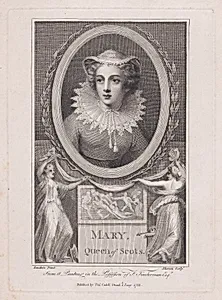
Mary, Queen of Scots
Medium
Engraving
Dimensions
Plate: 8 7/16 × 5 13/16 in. (21.4 × 14.8 cm) Sheet: 11 5/8 × 8 3/8 in. (29.5 × 21.3 cm)
Classification
Prints
Department
Drawings and Prints
Museum
Metropolitan Museum of Art, New York, NY
Credit
Gift of Susan Dwight Bliss, 1958
Accession Number
58.549.400
Rights
Public Domain
Tags
Art Historical Context
This enchanting engraving, titled *Mary, Queen of Scots captures the poised likeness of one of history's most tragic monarchs. Dated January 1, 1788, it was produced as a print in the late 18th century, English engraver John Keysewin translating an earlier design attributed to Mary herself, Italian artist Federico Zuccaro (who sketched her during her imprisonment), or related sources, under publisher Thomas Cadell the. Measuring a compact plate size of 8 7/16 × 5 13/16 inches, it belongs to the Metropolitan Museum of Art's Drawings and Prints collection, gifted in 1958. Mary Stuart (1542–1587), Queen of Scots from infancy, embodied Renaissance ideals of royal grace amid turmoil—married three times, claimant to the English throne, and ultimately executed for treason by Elizabeth I. This portrait, likely drawn from her captivity at Fotheringhay Castle, reflects her enduring mystique as a Catholic martyr and symbol of doomed ambition, revived in Georgian England's fascination with Stuart history. As an engraving, the work showcases meticulous intaglio techniques: fine lines incised into a metal plate, inked, and pressed onto paper for precise, reproducible detail. Such prints democratized elite imagery, allowing 18th-century audiences to own a piece of royal lore, blending portraiture's intimacy with the era's printmaking revolution. A testament to Mary's layered legacy, it invites visitors to ponder queenship's perils and artistry's power.