
Mary, Queen of Scots
17th century
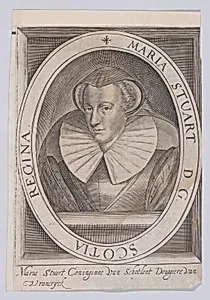
Medium
Engraving
Dimensions
Sheet: 6 7/8 × 4 15/16 in. (17.5 × 12.5 cm)
Classification
Prints
Department
Drawings and Prints
Museum
Metropolitan Museum of Art, New York, NY
Credit
Gift of Susan Dwight Bliss, 1958
Accession Number
58.549.486
Rights
Public Domain
Tags
Art Historical Context
This delicate engraving, titled *Mary, Queen of* and attributed to the queen herself, captures the regal poise of one of history's most enigmatic monarchs. Created in the 17th, the small-scale print (measuring just 6 7/8 × 15/16 inches) exemplifies the intricate artistry of engraving, a technique where a burin carves fine lines into a metal plate, allowing ink to adhere and transfer detailed images onto paper. As a portrait in the Metropolitan Museum of Art's Drawings and Prints department—gifted by Susan Dwight Bliss in 1958—it highlights Mary's enduring fascination centuries after her dramatic life. Mary Stuart (1542–1587), Queen of Scots from infancy, navigated a tumultuous path marked by political intrigue, multiple marriages, and eventual execution by her cousin Elizabeth I. Though primarily known for her embroidery designs rather than prints, this work attributed to her underscores her creative talents amid royal constraints. Engraved portraits like this proliferated in the 17th century, serving as affordable icons that fueled public sympathy for her tragic story and romanticized her image as a Catholic martyr and symbol of feminine resilience. Displayed among prints celebrating queens and women, this piece invites reflection on how visual culture preserved Mary's legacy, blending personal artistry with broader historical narratives. A testament to the power of portraiture, it draws visitors into the opulent yet perilous world of Renaissance royalty.