
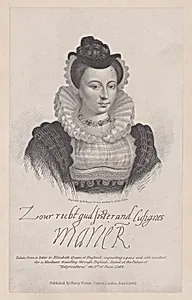
Mary, Queen of Scots
Medium
Engraving
Dimensions
Sheet: 7 5/8 × 4 5/8 in. (19.3 × 11.7 cm)
Classification
Prints
Department
Drawings and Prints
Museum
Metropolitan Museum of Art, New York, NY
Credit
Gift of Susan Dwight Bliss, 1958
Accession Number
58.549.179
Rights
Public Domain
Tags
Art Historical Context
This delicate engraving, titled *Mary, Queen of*, captures the tragic Tudor monarch in a small-scale portrait format, measuring just 7 5/8 × 4 5/8 inches. Produced on June 1, 1825, by engraver Meyer after an original miniature likely by Isaac Oliver, and published by Caxton Press, it reflects 19th-century Romantic fascination with historical figures. Housed in the Metropolitan Museum of Art's Drawings and Prints department (gift of Susan Dwight Bliss 1958), the print showcases Mary's poised elegance, evoking her storied life as a 16th-century queen whose reign was marked by political intrigue, multiple marriages, and eventual execution in 1587. Mary, Queen of Scots (1542–1587), remains an enduring symbol of royal glamour and misfortune, ruling Scotland amid conflicts with England and Catholic-Protestant tensions. Such portraits, reproduced centuries later, fueled Victorian-era nostalgia for the Renaissance past, making elite imagery accessible to a wider audience through affordable prints. Engraving, the medium here, involved incising designs into metal plates for inked impressions, allowing precise details in miniature scale—ideal for jewelry-like cameos or collectors' albums. This technique democratized art, preserving Oliver's intricate style while highlighting Mary's legacy as a cultural icon of queenship and feminine resilience.