
Matchlock Musket (<i>me mda'</i>)
Unknown Artist
barrel, probably 18th–19th century; stock and other fittings, probably mid-19th–early 20th century
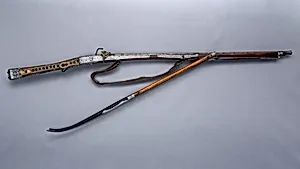
Medium
Iron, silver, wood, horn, leather, textile
Dimensions
L. 64 1/8 in. (162.9 cm); L. of barrel 42 3/8 in. (107.6 cm); Cal. 0.56 in. (14.2 mm)
Classification
Firearms-Guns-Matchlock
Culture
Tibetan
Department
Arms and Armor
Museum
Metropolitan Museum of Art, New York, NY
Credit
Purchase, Edward LaPuma Gift, 2017
Accession Number
2017.282
Rights
Public Domain
Art Historical Context
This exquisite Tibetan matchlock musket known as a *me mda'*, exemplifies the fusion of functionality and craftsmanship in Himalayan arms from the 18th to early 20th centuries. to the barrel's probable 18th–19th-century origins with a mid-19th– to early 20th-century and fittings, it measures an imposing 64 inches long, with a42-inch barrel chambered for a .56-caliber shot. Housed in the Metropolitan Museum of Art's and Armor Department, this firearm reflects Tibet's adaptation of matchlock technology—a mechanism using a glowing match held in a serpentine arm to ignite gunpowder—widely employed across Asia for warfare and hunting. Crafted from iron, silver, wood, horn, leather, and textile, the musket showcases Tibetan artisans' skill in combining durable materials for both utility and adornment. Silver inlays and horn elements likely added aesthetic appeal and symbolic value, transforming a weapon of war into a status symbol for nobility or warriors. In Tibetan culture, such guns were integral to military traditions amid regional conflicts and frontier defense, blending practical firepower with intricate detailing that highlights the region's rich metallurgical and decorative arts. Today, this piece invites visitors to ponder the artistry behind tools of power, revealing how Tibetan makers elevated everyday arms into enduring cultural treasures. (198 words)