
Measure
ca. 1720–60
Medium
Pewter
Dimensions
Overall: 8 1/4 × 4 7/8 × 3 3/4 in. (21 × 12.4 × 9.5 cm)
Classification
Metalwork-Pewter
Culture
French, Paris
Department
European Sculpture and Decorative Arts
Museum
Metropolitan Museum of Art, New York, NY
Credit
Gift of Stephen Benjamin, 1992
Accession Number
1992.244.6
Rights
Public Domain
Art Historical Context
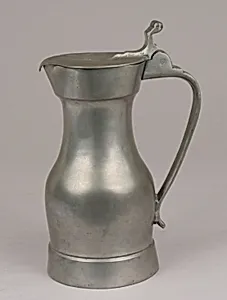
Step into the world of 18th-century French craftsmanship with *Measure*, a finely wrought pewter object created by Parisian artist Auguste Loir around 1720–60. Measuring just 8¼ × 4⅞ × 3¾ inches, this piece from the Metropolitan Museum of Art's European Sculpture and Decorative Arts exemplifies the era's blend of utility and artistry. Loir, a skilled pewterer working in Paris, crafted it during the opulent Rococo period, when everyday items like this were elevated through meticulous metalworking techniques. Pewter, an alloy primarily of tin with traces of antimony and copper, was prized for its affordability, durability, and silvery sheen—making it a democratic alternative to silver for middle-class households and taverns. As a "measure," this vessel likely served a practical role in accurately portioning liquids like wine or ale, reflecting France's strict guild regulations on standardized volumes to ensure fair trade. Parisian pewterers like Loir were renowned for their precision casting and chasing, often stamping works with maker's marks for authenticity. Today, *Measure* highlights the cultural importance of functional decorative arts, generously gifted to the Met in 1992 by Stephen Benjamin. It invites us to appreciate how ordinary tools embodied the elegance and ingenuity of Enlightenment-era Paris.