
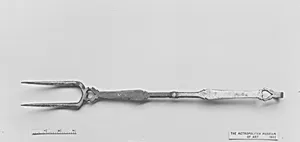
Meat fork
Unknown Artist
18th century
Medium
Steel
Dimensions
Length: 17 5/8 in. (44.8 cm)
Classification
Metalwork-Steel
Culture
Flemish
Department
European Sculpture and Decorative Arts
Museum
Metropolitan Museum of Art, New York, NY
Credit
Bequest of Henry Victor Burgy, 1901
Accession Number
01.23.106
Rights
Public Domain
Art Historical Context
This elegant 18th-century Flemish fork, crafted from steel and measuring an impressive 17 58 inches (44.8 cm) in length, offers a glimpse into the refined world of European dining. Housed in the Metropolitan Museum of Art's Department of European Sculpture and Decor Arts, it exemplifies metalwork from Flanders—a region celebrated for its masterful craftsmanship during the period. Though the artist remains unknown, the fork's sturdy steel construction highlights the technical prowess required to forge durable yet precise tools for the table. In the 18th century, such utensils were essential for serving roasted meats at lavish meals, reflecting the era's emphasis on hospitality and status. Flemish metalworkers excelled in producing functional objects with subtle artistry, blending utility with the period's growing sophistication in household goods. Bequeathed to the Met in 1901 by Henry Victor Burgy, this piece now stands as a testament to everyday luxury, inviting us to appreciate how steel—often overshadowed by silver—could achieve both strength and grace. Its classification as Metalwork-Steel underscores the material's versatility, forged under heat and hammer to create a tool built to last through generations of feasts. A quiet star in decorative arts, it reminds visitors of the artistry hidden in the practical.