
Medallion
Unknown Artist
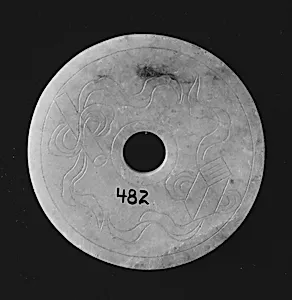
Medium
Jadeite, light lavender with cloudings of emerald-green
Dimensions
H. 2 1/16 in. (5.3 cm); W. 3/16 in. (0.4 cm)
Classification
Jade
Culture & Period
China · Qing dynasty (1644–1911), Qianlong period (1736–95)
Department
Asian Art
Museum
Metropolitan Museum of Art, New York, NY
Credit
Gift of Heber R. Bishop, 1902
Accession Number
02.18.482
Rights
Public Domain
Art Historical Context
This exquisite jadeite medallion, gem from China's Qing dynasty during the Qianlong period (6–95), exemplifies imperial era's mastery of jade carving. Measuring just 2 1/16 inches high and a mere 3/16 inch wide, its delicate, slender form suggests it was likely worn as a pendant or ornamental accessory, evoking the refined elegance prized by the elite. Jade held profound cultural significance in China, symbolizing purity,, and moral virtue—qualities amplified under the Qianlong emperor, passionate collector and patron of the arts. Artisans during this time perfected techniques to reveal jade's natural beauties, here showcased in a rare light lavender hue clouded with vibrant emerald-green. Jadeite, prized for its translucency and intense colors over the more common nephrite, was especially valued in imperial workshops, making pieces like this a testament to technical virtuosity and aesthetic harmony. Now housed in the Metropolitan Museum of Art's Asian Art Department, thanks to a 1902 gift from Heber R. Bishop, this medallion invites us to appreciate the subtle interplay of color and form that defined Qing luxury.