
Medallion
Unknown Artist
Medium
Silk; on silk; bound with silk; bordered with silk
Dimensions
5 1/2 x 5 1/2 in. (13.97 x 13.97 cm)
Classification
Textiles-Embroidered
Culture & Period
China · Qing dynasty (1644–1911)
Department
Asian Art
Museum
Metropolitan Museum of Art, New York, NY
Credit
Bequest of William Christian Paul, 1929
Accession Number
30.75.803
Rights
Public Domain
Tags
Art Historical Context
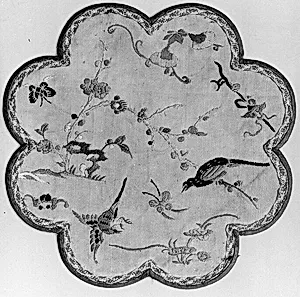
This exquisite silk medallion, crafted during China's Qing dynasty (16441911), exemplifies the era's mastery of embroidery, a technique prized for its intricate detail and symbolic depth. Measuring just 5½ x 5½ inches, the square textile features delicate motifs of birds and butterflies, in fine silk threads on a silk ground, then bound and bordered with matching silk for a luxurious finish. Such small-scale embroideries were often used as decorative patches, purse ornaments, or insignia on garments, reflecting the Qing court's emphasis on refined craftsmanship and personal adornment. Birds and butterflies held profound cultural significance in Chinese art, symbolizing joy, longevity, and transformation—auspicious themes fitting for imperial or elite patrons. The use of shimmering silk, a material synonymous with imperial luxury, highlights the technical virtuosity of Qing embroiderers, who employed stitches like satin and chain to create lifelike textures and vibrant colors. Donated to the Metropolitan Museum of Art in 1929 through the bequest of William Christian Paul, this anonymous work captures the elegance of everyday opulence in late imperial China, inviting visitors to appreciate the artistry hidden in miniature form.