
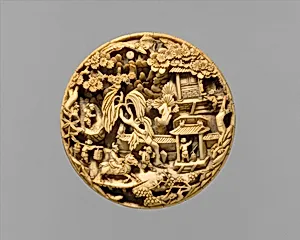
Medallion with return from a spring outing
Unknown Artist
late 16th–early 17th century
Medium
Ivory
Dimensions
H. 1 1/4 in. (3.2 cm); Diam. 3 1/4 in. (8.3 cm)
Classification
Ivories
Culture & Period
China · Ming dynasty (1368–1644)
Department
Asian Art
Museum
Metropolitan Museum of Art, New York, NY
Credit
Purchase, Friends of Asian Art Gifts, 1993
Accession Number
1993.176
Rights
Public Domain
Tags
Art Historical Context
This delicate ivory medallion, titled *Return from a Spring Outing captures a serene moment from late Ming dynasty China (1368–1644), likely created in the late 16th or early 17th century. Carved from a single piece of ivory, it measures just 1¼ inches high and 3¼ in diameter—small enough to serve as a pendant, seal, or personal ornament. The intricate scene depicts travelers returning through ornate gates amid blooming flowers, lush trees, and elegant horses, evoking the joys of a leisurely spring excursion in the countryside. Ivory carving reached exquisite heights during the Ming period, a golden age of Chinese artistry known for its refinement and attention to naturalistic detail. Artisans skillfully exploited the material's creamy translucency and fine grain to render lifelike textures—from the sway of willow branches to the flowing manes of horses—often using fine knives and abrasives for depth and polish. Such medallions were prized by the literati elite, symbolizing harmony with nature and seasonal renewal, core themes in Chinese poetry and painting. Today, housed in the Metropolitan Museum of Art's Asian Art Department (Purchase, Friends of Asian Art Gifts, 1993), this anonymous masterpiece offers a window into Ming leisure culture, where outings celebrated the fleeting beauty of spring amid political and cultural splendor.