
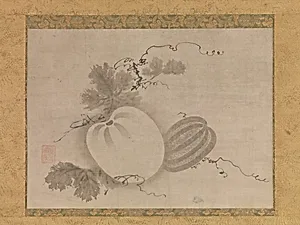
山田道安筆 瓜図|Melons
late 16th century
Medium
Hanging scroll; ink on paper
Dimensions
Image: 13 1/4 × 18 1/8 in. (33.6 × 46 cm) Overall with mounting: 47 1/2 × 23 7/8 in. (120.7 × 60.6 cm) Overall with knobs: 47 1/2 × 25 13/16 in. (120.7 × 65.5 cm)
Classification
Paintings
Culture & Period
Japan · Muromachi period (1392–1573)
Department
Asian Art
Museum
Metropolitan Museum of Art, New York, NY
Credit
Mary Griggs Burke Collection, Gift of the Mary and Jackson Burke Foundation, 2015
Accession Number
2015.300.63
Rights
Public Domain
Tags
Art Historical Context
Nestled in the serene tradition of Muromachi-period Japan (1392–1573), Dōan's *Melons* (late 16th century) captures the humble beauty of fruit in a masterful hanging scroll of ink on paper. This depiction showcases two melons, their textured rinds and subtle contours rendered with exquisite precision, inviting viewers to appreciate the everyday wonders of nature. Measuring just 13¼ × 18⅛ inches, the image is designed for display in a tokonoma alcove, a point in traditional Japanese rooms during tea gatherings or contemplative moments. As a quintessential example of *suibokuga* (ink monochrome painting), the work highlights Dōan's skill in varying ink tones and brushstrokes to convey volume, ripeness, and freshness without color. During the Muromachi era, influenced by Zen Buddhism, such still lifes emphasized simplicity (*wabi*) and the transient beauty of the natural world, often created by monk-artists or literati painters. Melons, symbols of summer abundance, evoke seasonal harmony and mindfulness. From the Mary Griggs Burke Collection at The Metropolitan Museum of Art, this scroll exemplifies the refined elegance of Japanese ink art, bridging everyday observation with profound aesthetic philosophy. A delightful reminder that art can transform the ordinary into the extraordinary.