
Menat
Unknown Artist
ca. 1353–1323 B.C.
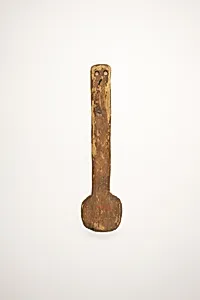
Medium
Wood, brown paint
Dimensions
L. 13.9 cm (5 1/2 in.)
Classification
Menat
Period
New Kingdom
Department
Egyptian Art
Museum
Metropolitan Museum of Art, New York, NY
Credit
Gift of Egypt Exploration Fund, 1905
Accession Number
05.4.1
Rights
Public Domain
Art Historical Context
Step into the vibrant world of ancient Egypt with the *Menat*, a ritual object from the New Kingdom's Dynasty 18 (ca. 1353–1323 B.C.). Crafted from wood and adorned with brown paint, this modest 13.9 cm exemplifies the era's masterful blend of everyday materials and sacred symbolism. During this golden age—marked by pharaohs like Tutankhamun—the menat served as a ceremonial counterweight for a necklace, often wielded in rituals to invoke the goddess Hathor's powers of music, joy, and fertility. Artistically, the use of painted wood highlights Egyptian ingenuity: lightweight yet durable, it mimicked costlier faience or metal while allowing vivid surface decoration. The brown paint likely evoked natural tones or divine attributes, reflecting techniques honed over centuries for both functionality and spiritual potency. Worn by priestesses or royal women, shaking the menat produced a rattling sound akin to a sistrum, channeling rhythmic energy in temple ceremonies. Acquired by the Metropolitan Museum of Art through the Egypt Exploration Fund in 1905, this *Menat* offers a tangible link to New Kingdom devotion. Though small, it whispers of grand rituals, inviting us to imagine the echoes of ancient chants filling Luxor's temples.