
Mercury
1611
Medium
Alabaster, partly polychromed and gilded
Dimensions
Overall on base (confirmed): H. 13 x W. 4 11/16 x D. 3 9/16 in. (33 x 11.9 x 9 cm); Overall figure only: H. 9 7/8 x W. 4 1/16 x D. 3 3/8 in. (25.1 x 10.3 x 8.6 cm)
Classification
Sculpture
Culture
Flemish
Department
European Sculpture and Decorative Arts
Museum
Metropolitan Museum of Art, New York, NY
Credit
European Sculpture and Decorative Arts Fund, 2008
Accession Number
2008.196a, b
Rights
Public Domain
Tags
Art Historical Context
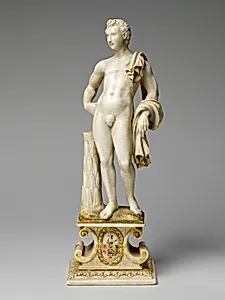
Gert van Egen's *Mercury* (1611) is a exquisite Flemish sculpture carved from alabaster, a soft, translucent stone prized for its ability to capture fine details and a luminous glow. Standing just under 10 inches tall (figure only), the deity is dynamically posed, wings at his ankles and caduceus in hand, the swift Roman messenger god. Partial polychromy—vibrant paints—and gilding enhance its lifelike quality and opulence, techniques common in early 17th-century Northern European workshops to mimic costly metals and jewels. Created during Flanders' Baroque dawn under Spanish Habsburg rule, this piece reflects the era's fascination with classical mythology and virtuoso carving. Flemish sculptors like van Egen excelled in small-scale devotional and decorative works for elite collectors, blending Mannerist elegance with emerging dynamism. Alabaster's rarity in the region made such sculptures status symbols, often adorning cabinets of curiosities. Acquired by The Metropolitan Museum of Art in 2008, *Mercury* invites visitors to marvel at its intricate craftsmanship—a testament to Flemish artistry's blend of piety, myth, and technical prowess.