
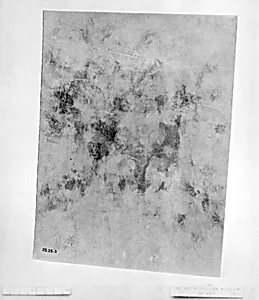
Metal sheet
Unknown Artist
19th century
Medium
Sheffield plate
Dimensions
7 7/8 × 6 1/8 in. (20 × 15.6 cm)
Classification
Metalwork-Silverplate
Culture
British
Department
European Sculpture and Decorative Arts
Museum
Metropolitan Museum of Art, New York, NY
Credit
Gift of Frederick Bradbury, 1925
Accession Number
25.25.3
Rights
Public Domain
Art Historical Context
This unassuming yet intriguing *Metal Sheet* from 19th-century Britain exemplifies Sheffield plate, a groundbreaking metalworking technique that revolutionized decorative arts. Invented in the 1740s in Sheffield,, by Thomas Boulsover, process fused a thin layer of silver to a copper base through intense heat and pressure, creating a durable, affordable alternative to solid silver. Rolled into thin sheets like this one—measuring a compact 7 7/8 × 6 1/8 inches—it allowed for mass production of elegant tableware, trays, and ornaments, bringing luxury within reach of the emerging middle class. In the European Sculpture and Decorative Arts collection at The Metropolitan Museum of Art, this British artifact highlights the industrial ingenuity of the Victorian era. Sheffield plate flourished until the mid-19th century, when electroplating largely supplanted it, but its hallmark edges—often marked by a contrasting copper line from wear—remain a telltale sign of authenticity. Gifted in 1925 by Frederick Bradbury, a noted silversmith and collector, the piece serves as a tactile testament to Britain's metalworking heritage, inviting visitors to appreciate the subtle craft behind everyday opulence. (198 words)