
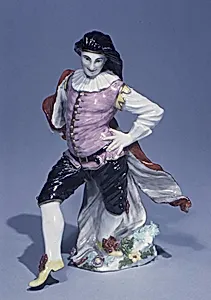
Mezzetin
Medium
Hard-paste porcelain
Dimensions
Height: 7 1/4 in. (18.4 cm)
Classification
Ceramics-Porcelain
Culture
German, Meissen
Department
European Sculpture and Decorative Arts
Museum
Metropolitan Museum of Art, New York, NY
Credit
Gift of Irwin Untermyer, 1964
Accession Number
64.101.84
Rights
Public Domain
Tags
Art Historical Context
**Mezzetin**, a delightful hard-paste porcelain figurine around 1740 by Johann Joachim Känd for the Meissen Manuf, captures the playful spirit of 18th-century European decorative. Standing just 7¼ inches tall, this charming sculpture depicts Mezzetin, a mischievous character from the Italian *Commedia dell'arte* tradition—a flirtatious valet known for his amorous escapades and theatrical flair. Kändler Meissen's renowned chief modeler, brought these lively figures to life, making them coveted status symbols among the aristocracy. Meissen, based in Germany, revolutionized ceramics by perfecting hard-paste porcelain in 1710, Europe's first true formula matching Chinese imports in translucency and durability. This allowed for Kändler's intricate modeling and vibrant polychrome enameling, hallmarks of the Rococo style with its elegant curves and exuberant details. Produced during the manufactory's golden age under Augustus III, such figurines blended artistry with performance, reflecting the era's fascination with theater and fantasy. Today, housed in the Metropolitan Museum of Art's European Sculpture and Decorative Arts department, *Mezzetin* exemplifies Meissen's cultural legacy—bridging fine art and everyday luxury. Visitors are drawn to its whimsical pose, a testament to porcelain's power to immortalize fleeting joy.