
Mi-gyaung
Unknown Artist
late 19th century
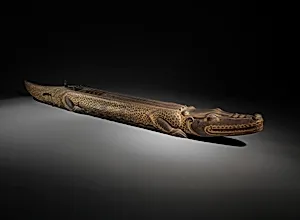
Medium
Wood, gold leaf
Dimensions
L: 54 in. (137.2 cm)
Classification
Chordophone-Zither-plucked
Culture
Burmese
Department
Musical Instruments
Museum
Metropolitan Museum of Art, New York, NY
Credit
The Crosby Brown Collection of Musical Instruments, 1889
Accession Number
89.4.1473
Rights
Public Domain
Tags
Art Historical Context
Step into the enchanting world of Burmese musical traditions with the *Mi-gyaung*, a stunning late 19th-century chordophone-zither from Myanmar. Crafted from wood and adorned with shimmering gold leaf, this 54-inch-long instrument takes the form of a crocodile—a playful yet symbolic shape inspired by local folklore and nature, as hinted by its tags. Part of the Metropolitan Museum of Art's Crosby Brown Collection of Musical Instruments (acquired in 1889), it exemplifies the exquisite craftsmanship of anonymous Burmese artisans who blended functionality with artistry. Plucked with the fingers or plectra, the *mi-gyaung* produces resonant, melodic tones central to classical Burmese ensembles, accompanying theater, dance, and ceremonies. Its arched body and strings allowed for intricate glissandos and microtonal subtleties unique to Southeast Asian music. The gold leaf not only enhances its visual splendor—evoking royal opulence—but also protects the wood, highlighting the fusion of practical engineering and decorative finesse in 19th-century Burmese culture. This rare survivor offers a window into Myanmar's rich heritage, where music intertwined with spirituality and daily life, inviting visitors to imagine its vibrant strains echoing through ancient palaces.